Minneapolis: Healthcare Workers

Impacts of ICE: Minneapolis Healthcare Workers

This is the latest piece based on my interviews with folks in Minneapolis. The video is in English with me reading directly from the written piece. And below in this post is the Spanish translation done by a friend of mine who works as a translator. Share with your Latino friends 🙂 The English is way down below at the bottom.

“Me senté frente a ellos en la mesa de centro donde, por momentos, nos turnábamos para tratar de no llorar. Tal vez para mí era más fácil no llorar, porque podía esconderme detrás del escudo objetivo de ser el “entrevistador”. Pero sí hice un plan para hacerlo una vez que estuviera resguardado en la privacidad de mi coche, y se los dije.

No hice ninguna grabación de audio. Mi teléfono estaba guardado. Sin video. Sin libreta. Nunca sabrán sus nombres, y la razón se puede resumir en un puñado de otros nombres: Trump, Noem, Patel Kash, Homan, Bovino, Bondi.

Ambos trabajan en el sector salud. Voy a mezclar sus historias para ocultar aún más sus identidades por seguridad, porque es una realidad.

A principios de enero de este año (2026), la administración Trump recortó el financiamiento para la atención médica en Minnesota. El impacto en cadena de esto afecta a muchos miles de habitantes de Minnesota, independientemente de por quién hayan votado, independientemente de su estatus migratorio. Imagina que eres un enfermero de atención domiciliaria o un Asistente de Cuidado del Paciente (PCA) hablando con un cliente después de que recibió la notificación de pérdida de financiamiento. Te están preguntando cómo van a pagar la electricidad que alimenta una máquina que sostiene su vida… porque los recortes de financiamiento incluyeron la asistencia para servicios públicos para personas con discapacidad que viven en casa. Imagina preguntarte cómo, o si, podrán respirar.

Otra historia… Como enfermero que visita a sus pacientes en casa, ves a un cliente con discapacidad física usando un walkie-talkie para realizar una patrulla vecinal en busca de ICE, desde su scooter.

Otra más… Un día, mientras conduces hacia la casa de un paciente, agentes de ICE en un automóvil te siguen.

Incluso en los mejores momentos, las personas con discapacidad que viven en casa tienen dificultades para acceder a servicios, y tu vocación es brindar ayuda. Pero cuando el financiamiento ha sido recortado, y ICE podría intentar seguirte hasta sus hogares, y tus pacientes viven con miedo por su salud y su seguridad, lo que sientes es agotamiento. Determinación, pero agotamiento. En lo financiero, sin embargo, puedes enfrentarte a la realidad de que no hay fondos para pagar tu salario. Eso significa que tienes que dejar tu puesto y buscar otro trabajo, sabiendo que no hay alguien más que ocupe tu lugar. ¿Quién va a cuidar de tus pacientes?

Escuché sobre una mujer embarazada que esperaba a su primer hijo con su esposo. Antes de que ICE llegara a la ciudad, ella era plenamente consciente de sus problemas de salud preexistentes y de las complicaciones del embarazo, pero estaba bien encaminada con buena atención médica y apoyo. Pero luego sus familiares fueron detenidos por ICE. Ella se resguardó en casa con su esposo para mantener unida a su creciente familia, pero entonces no pudo acceder de forma segura a los medicamentos y controles necesarios para un embarazo de alto riesgo. Como resultado, su condición preexistente se agravó y fue necesaria la hospitalización. Incluso mientras estaba en el hospital recibiendo tratamiento, la futura madre estaba profundamente preocupada por ser detenida por ICE y tenía prisa por regresar a la seguridad de su hogar. Cabe señalar que esta futura madre… es ciudadana plena y legal de los Estados Unidos. La salud de su bebé ahora está en duda. Los efectos de su condición comórbida con el embarazo también dejan en duda su propia salud.

Lo que ves en las noticias son tiroteos, protestas y secuestros, y la fachada de la misión de Noem.

Mientras esas cosas ruidosas y evidentes están ocurriendo, hay una serie silenciosa pero dramática de impactos emocionales y económicos en cascada con consecuencias y daños reales para ciudadanos de todos los ámbitos de la vida. Se está moviendo rápido. Y revertirlo requerirá más que simplemente “sacar a ICE”.

Cuando estábamos terminando nuestra conversación, les pregunté a ambos cómo se sentían. Estaba observando a dos personas que se preocupan profundamente por ayudar a quienes lo necesitan, luchando por explicar y darle sentido a un mundo nuevo. En este nuevo mundo tienen que ver a los pacientes sufrir más de lo razonable y, peor aún… todo es completamente evitable. Este nuevo sistema desmantela redes de seguridad y erosiona la confianza. Y todos nos quedamos tratando de adivinar por qué se está permitiendo que continúe. Hablaron de agotamiento y perseverancia, pero sobre todo el sentimiento era de tristeza.”

English:

I sat across from them at the coffee table where, at times, we were taking turns trying to not cry. It was easier for me perhaps, to not cry, because I could hide behind the objective shielding of being the “interviewer”. But I did make a plan to do so once I was tucked away in the privacy of my car and I told them so. 

I took no audio recording. My phone was tucked away. No video. No notepad. You’ll never know their names and the reason why can be summed up in a handful of other people’s names: Trump, Noem, Patel Kash, Homan, Bovino, Bondi. 

Both of them work in the healthcare field. I am going to blend their stories to further obfuscate their identities for safety because it’s a reality. 

In early January of this year (2026) the Trump administration slashed funding for healthcare in Minnesota. The downstream impact of this impacts many thousands of Minnesotans regardless of who they voted for, regardless of their immigration status. Imagine that you are a home health nurse or a Patient Care Assistant (PCA) talking to a client after they got their notice of losing funding. They are asking you how they will pay for their electricity, that runs a machine, that sustains their life…because the funding cuts included utility assistance for disabled people living at home. Imagine wondering how or if they will be able to breathe. 

Another story…As a nurse that visits clients at home, you see a physically disabled client using a walkie talkie to conduct a neighborhood patrol for ICE, on their scooter. 

Another one…One day while driving to a client’s home, ICE agents in a car follow you. 

Even at the best of times, people living disabled at home have difficulty accessing services, and it’s your calling to render aid. But when the funding has been cut, and ICE might try to follow you to their homes, and your clients are living in fear for their health and their safety, what you feel is exhausted. Determined but exhausted. Financially though, you may face the reality that there is no funding to pay your wages. It means you have to leave your posting and find a different job, knowing there isn’t someone else to take your place. Who is going to care for your clients?

I heard about a pregnant woman expecting her first child with her husband.  Before ICE came to town she was fully aware of her pre-existing health challenges and the complications with pregnancy, but she was on track with good healthcare and support. But then her relatives were taken by ICE. She sheltered in place with her husband to keep her growing family together but was then unable to safely access necessary medications and checkups for a high risk pregnancy. As a result of this, her pre existing condition flared, and hospitalization became necessary. Even while in the hospital for treatment, the expectant mother was deeply concerned about being taken by ICE and was in a rush to get back to the safety of her home. It should be noted that this mother to be…is a full and legal citizen of the USA. The health of her child is now in question. The impacts of her comorbid condition with pregnancy also leaves her individual health in question.

What you see in the news is shootings, and protests and kidnappings and the facade of Noem’s mission. 

While those loud and obvious things are going on, there is a quiet but dramatic series of cascading emotional and economical impacts with real consequences and harm for citizens from all walks of life. It’s moving fast. And to reverse it will take more than just getting “ICE out”.

When we were wrapping up our conversation, I asked them both how they were feeling. I was watching two people who care so passionately about helping people in need, struggling to explain and make sense of a new world. In this new world they have to watch patients suffer more than is reasonable and worse…it’s all completely avoidable. This new system breaks down safety nets and erodes trust. And we are all left to guess at why it’s being allowed to continue. They spoke about exhaustion and perseverance but above all the feeling was of sadness.

Minneapolis Schools: A Video

Here is my small video contribution to help explain just one facet of how life has been altered by ICE’s presence in the Minneapolis area: The Impact on Minneapolis Schools

There’s a lot to unpack from my third trip to Minneapolis to volunteer and deliver aid. I am worn out. And that’s just from 3 days there.

Meanwhile the people there live this every.single.day.

A Conversation with a Minneapolis Teacher

Minneapolis Outsider Report: A Conversation with A Teacher

On Sunday February 15, I was in a busy Minneapolis coffee shop picking up a sandwich and coffee before my 5 hour drive back to my home in Iowa City. While waiting for the sandwich to be made I overheard a group of about 6 people busily chatting about the latest updates on their Signal chat regarding their neighborhood ICE Patrol.

I watched smiling people walking their dogs in the welcome sunlight. Notably though, I found myself sitting next to someone who was willing to share their experience of what it has been like to work within the Minneapolis school system since ICE descended upon the Twin Cities. When I confessed that I had been hoping to talk to someone working within the school system the first words out of their mouth were: “I am in no way ready to go on the record and I don’t think any of my colleagues would either. We have student privacy to protect and so many other things to consider. Besides that, we are all exhausted.” I asked them if there was anything in general that they would be willing to share with me.

Speaking only in generalities they shared with me the following, which I will attempt to recall to the best of my ability:

-There are many students who are not attending in-person classes due to safety concerns (this includes children of all skin tones and legal status backgrounds)

-The schools responded to this by making online learning available

-Many students and their families do not feel safe enough to attend the online classes. The risk is that online classes allow others to see into their homes, overhear voices nearby…and to identify who is on screen. Thus, it’s not considered safe.

-If a student does not attend classes for 15 days, they are then removed from the student rolls, which means the school district or school (I am unsure exactly which the speaker meant here) loses the state money for that student.

-Losing funding for missing students means that all children within the school system are impacted. Services that are paid for with that money are impacted.

-The downstream economic impacts of losing funds are very real

-Some teachers have tried to encourage students trapped at home to keep learning by delivering materials to them at home. In many cases this is unsuccessful because the family does not want anyone coming to their home and exposing their location. Also, they don’t know that they can 100% trust anyone coming to their home to deliver supplies. It’s already been documented that ICE is impersonating mutual aid delivery, so this is unfortunately a reasonable fear to have.

-I was told that there are cases of school teachers and admins trying to help children come back to school in-person by arranging rides to the school grounds via parents who are less likely to be questioned about their immigration status. In the examples they gave, I was told it was unsuccessful.

Happy Valentine’s Day from ICE

Saturday February 14th, 2026

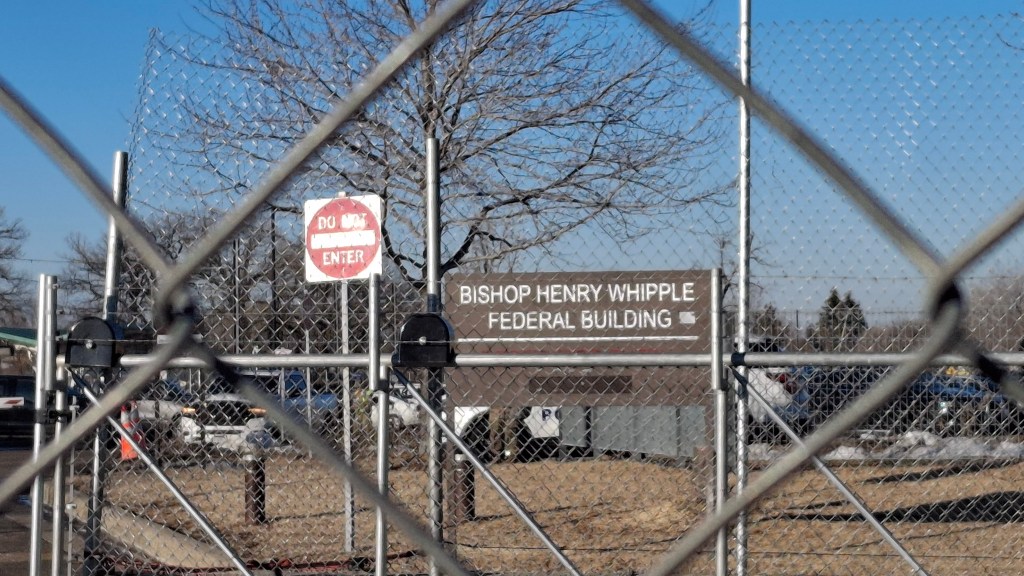
It was about 55 degrees and sunny when I stepped off the Blue Line Light Rail at the Veterans Administration stop today. I had been looking at the blandly designed and drab colored Fred Whipple Federal Building as the train approached the stop.

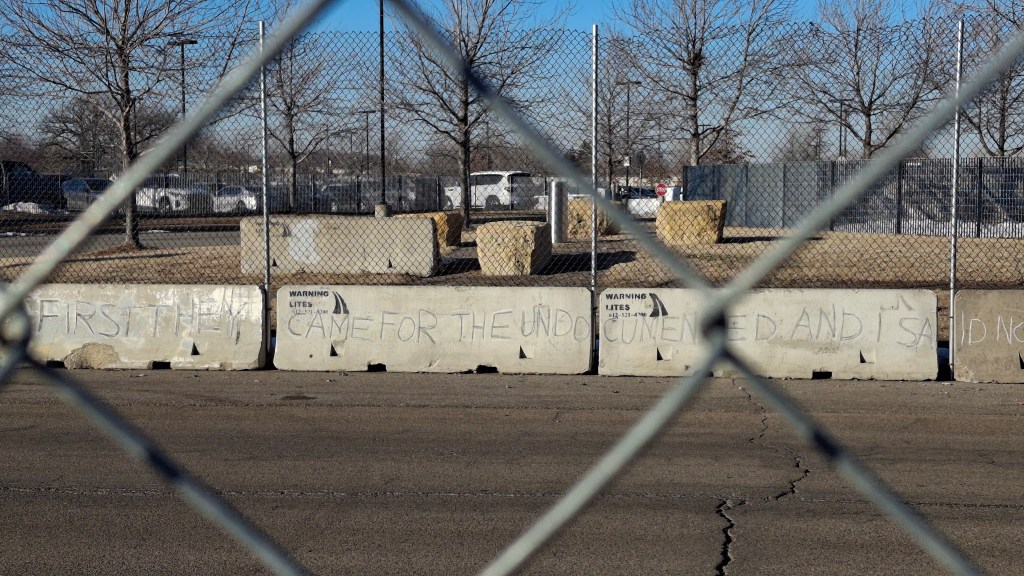
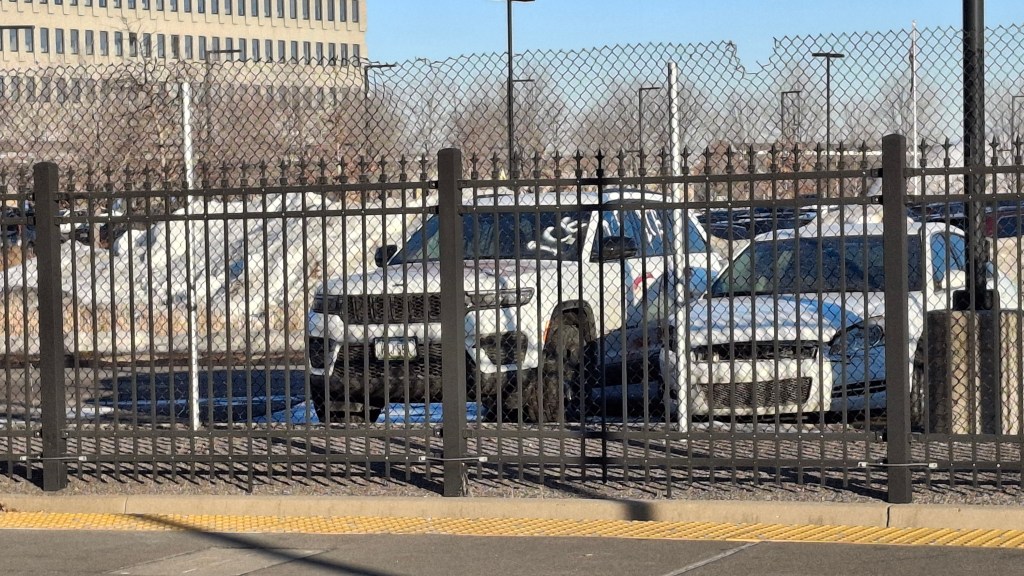
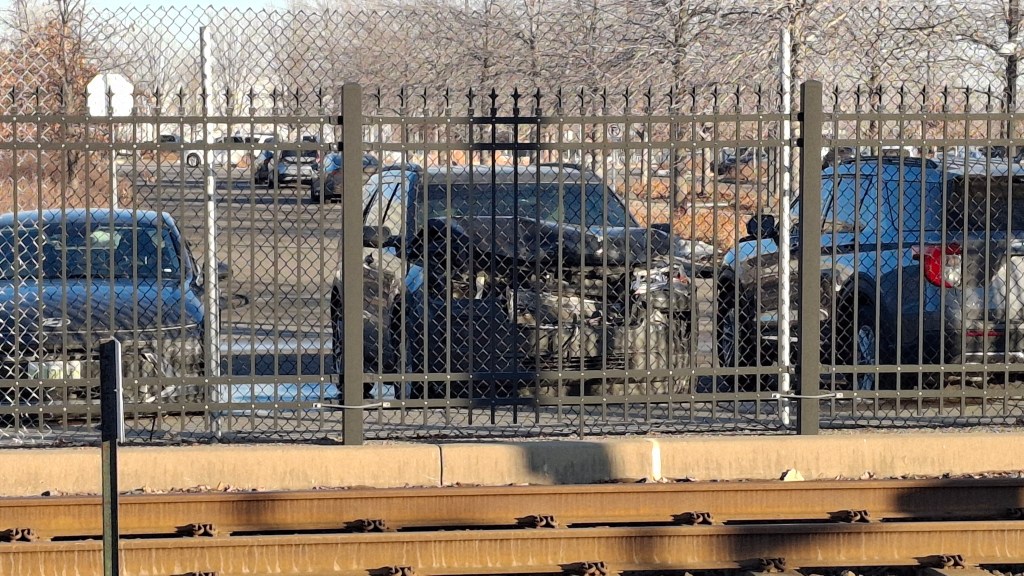
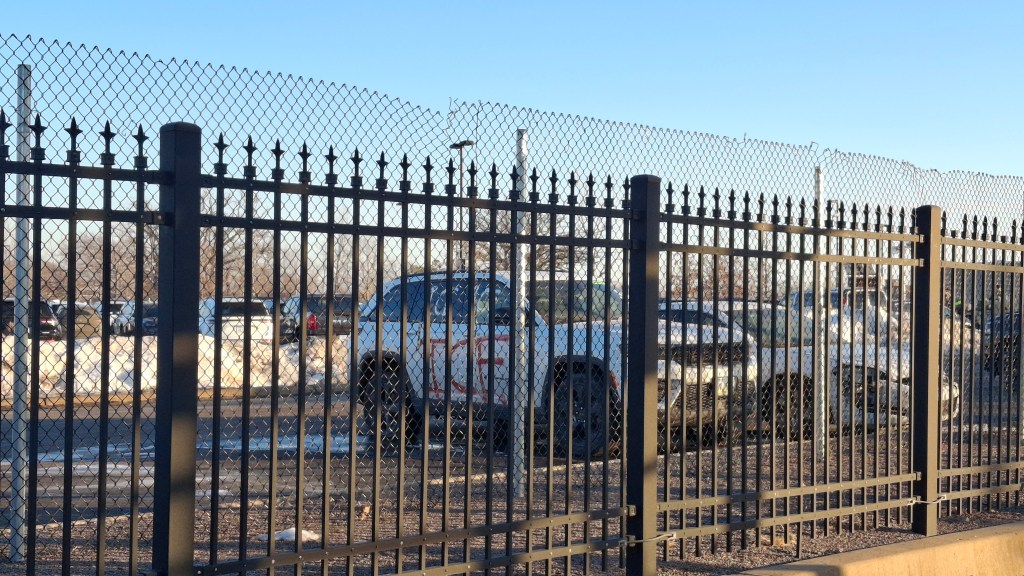
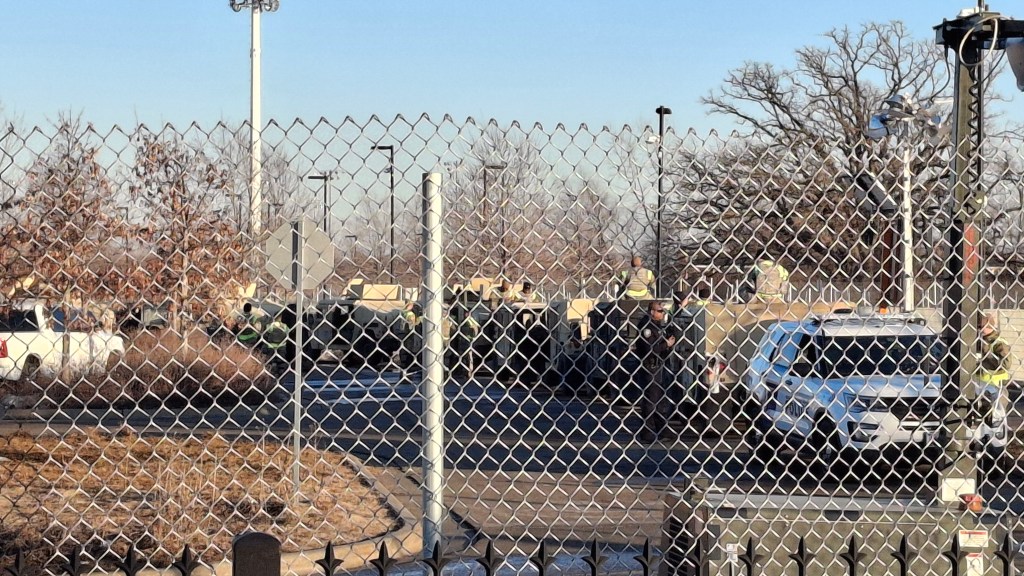
I saw ICE agents exiting the western side of the building, still wearing their black masks up to their eyes, ending or just starting their shifts. This building….it’s the place that you’ve seen in the news, where the big clashes have occurred between ICE agents and protesters. I also noted some vehicles along the fenceline in the federal parking lot. A white one was covered with anti-ICE graffiti and had a flat tire. A black one had the front end smashed in, presumably from when agents had use their car to ram another vehicle they were pursuing but I am unsure. There was a small contingent of National Guard troops. They were calmly resting on the rooftops of and leaning against the sides of, their Humvees. They were mostly looking at their cell phones. Someone asked me: “if they want to protect the community then why are they parked on the same side where ICE parks?”

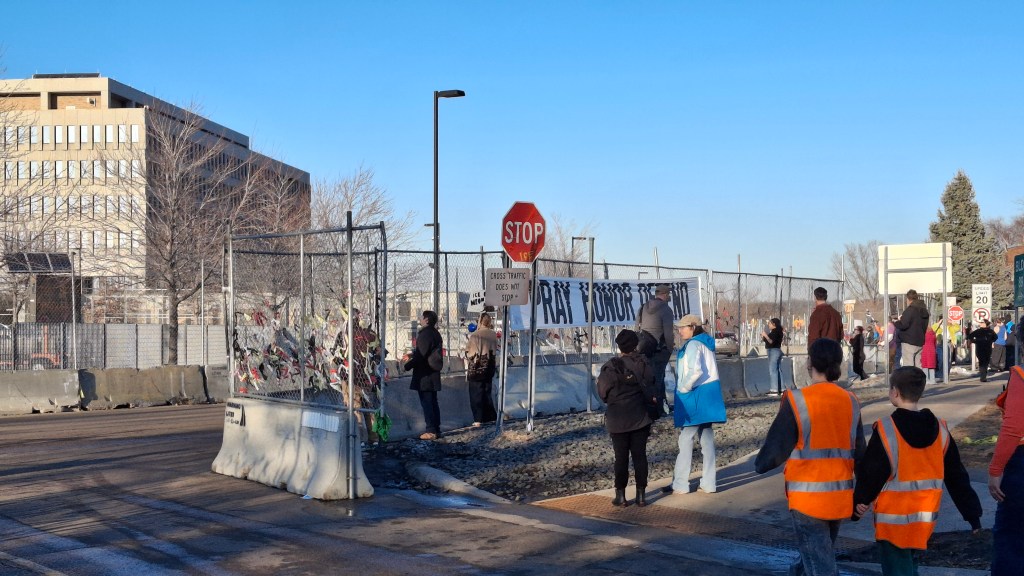
I walked over to where the main protest area was located. A DHS helicopter circled high above, so high that I couldn’t hear it. However, it should be noted that even from way up there, an onboard L3Harris Wescam MX-10 camera (or the Wescam MX-15 or MX-20) could profile my face and enter it into their database, along with every single other person there. DHS helicopters and fixed wing aircraft have become commonplace at peaceful protests here in Minneapolis. It’s altogether reasonable to presume that data gathering is exactly what they are doing from up there.

While there at the protest I learned about a man who was in the USA legally. ICE didn’t care about that. As the man was trying to run away he took a fall and broke both of his feet. He was then shipped off to Dilley Immigration Detention Center in Texas. After ICE took their slow time to verify that the man was in fact, here legally, he was then brought back to Whipple and processed out. He was released on a very cold day, in a wheelchair. A group called Haven Safe took in this legal resident of the USA and helped him contact family, get warm, etc. because ICE doesn’t do that for anyone that they release. They just dump you out in the parking lot, usually without proper clothing, your cell phone, your car keys, and no calls to your loved one’s to pick you up. I was told that it’s common for about 20 people per day to be released from the Whipple Building in this fashion. Some of these people have been held in Texas, illegally and without due process, for weeks.

It’s important to track that every single person released by ICE is a silent admission of guilt and law breaking on the part of the federal government. It’s a silent way to say “we don’t care that we broke the law and we wash our hands of you now”

Before I went to the Whipple Building I had been volunteering at a mutual aid station. A lot of people have asked why there is a need for mutual aid and donations of food and household items. Well…let’s go back to how many people are released at the Whipple Building. If 20 people are released on a given day, that could mean that each of them is a money earner for their family. They are now missing, let’s say, two weeks of income to buy groceries, pay rent, car payments, etc. If your husband was grabbed off the streets by ICE, even though he was here legally…and you are now at home alone with your kids, what happens if you are also grabbed illegally? Who will watch your kids? What you do, is you stay at home. You hide in your house. Your rent goes unpaid. Your kids probably stop going to school. Soon you run out of food.

The place I donated at today is the kind of place that provides food and help to people who find themselves in these situations. It’s also just one of many such places around the Twin Cities. Even if ICE left this area today, it will likely take months to get every unlawfully kidnapped person back home and for people to recover financially…and all because of what? This has always been about one thing: and it’s not immigration enforcement.

When I was driving back to my hotel for the night I took a detour through a neighborhood to find a coffee shop. I saw a large white SUV with super dark tinted windows drive past me. I then noticed a car following them. This car had someone inside of it with a bullhorn and the person had rolled down their window…and using the bullhorn they were shouting “The white SUV in front of me is ICE” and suddenly I found myself following both cars. Because I thought, “maybe if I follow, my observing it will make ICE less likely to retaliate?” At each stop sign I wondered if ICE would get out of their cars with weapons drawn, as we have all seen by now. As we drove through this tightly packed residential community I could see people coming out of their houses to see what was happening. People walking on the sidewalks were smiling and waving in support. Some yelled at the ICE vehicle in anger. I kept thinking, this is what it takes. If you are afraid of what ICE will do to you, and that makes you not do it…it only means that they will continue to terrorize other people. People who don’t understand what’s going on here will continue to say and think things like “well if you would just let them do their job”…

If you read this and you are more concerned about ICE agents possibly being thwarted in their efforts to detain someone via a person following their car shouting in a bullhorn…if that makes you angrier than the murder of Rene Good or Alex Pretti, then it does say something really important about you.

It means you still think what is happening here in Minneapolis is about immigration enforcement.

When you realize it’s not, then you’ll be able to understand how someday you might be the one in the car shouting into a bullhorn to protect your neighbors.

Pics from today:

Oh-Hello there keyboard

Oh hi…hello there Mac Airbook keyboard, it’s been a long time since we hung out. Feels like months since you and I typey typed out my thoughts into letters onto a screen, just because I needed to write or just because I wanted to write – for fun. To clear my brain. To offload all the things that I am doing. I have missed this.

And I might not have anything important or critical to say whatsoever and I feel out of practice. Right now though I have about 40 minutes till I need to be somewhere so here we go.

I am at Deluxe Bakery eating a slice of pumpkin pie and a turkey shaped cookie for breakfast. To drink I am sipping down a delicious decaf cortado (no additional cream or sugar please and thank you).

It’s Saturday Nov. 8th, 2025 and about 11:50 AM. I was at work this morning trying to catch up on my hours. I took Thursday off this week because 1) I was feeling super run down and a bit ill 2) I had a friend coming through town and I wanted to rest up and see if I could feel better before they arrived.

I rested all day and didn’t work at my day job, the one that pays the bills. But in that rest time I had the time and restful space to catch up with some folks via text and email. The end result is that I scheduled 4 new interviews for the Iowa Prairie Podcast Project. This is a testament to how creative and proactive we would all be were we not “working” for a living. 

My friend is 28 years old. And my kids and this kid’s siblings all used to play together back in like…2007. It was such a lovely catch up with someone whom I have known since he was 6 years old. Also odd how you can be good friends with people who are your children’s age. Kiah, my visitor, has also been the one who created OST’s for most of my movies thus far and many more short videos. When he was here he informed me that the alarm tone or ring tone on his phone was a segment from one of the title tracks for one of my movies (that he composed). So nice to be reminded that we worked together on a movie that made a difference in land conservation. 

I felt better on Friday and worked from about 7 AM until 6 PM. Then off to the record store to buy this beauty:

I last owned this album probably in 1985, just before giving away all my records, because you know…no one was EVER going to listen to vinyl again. It’s now the 7th record in my newly building collection. I fell asleep while listening to it on the second play through but snapped a pic of my record player in the darkness because I like how it looked.

Oh gosh what else…hmmm….I have been working so incredibly hard on the Iowa Prairie Documentary Project. It’s got ahold of me all day, everyday. It’s really all I think about. Daydream about. I am constantly sending myself notes and messages to not lose track of an imagined sequence or new idea of a visual. This movie is happening so differently than any of the others. It’s really become my Hail Mary pass regarding the state of the world we live in…as seen through the lens of the state of Iowa. I can tell you it’s a sobering thing to realize that one can tell the story of how it’s all gone much too far without leaving home. All the worst stories are right here…and that’s really strange. It keeps me up at night but not in an awful way. More like a…how can I creatively convey these ideas that I have been pondering since the 6th grade, sort of way. Because that is literally when I first began really seeing our separation from and depletion of, the natural world. I started journalling about the topic when in study hall or detention hall. 

Today in about 30 minutes I will be picking up some used large diaphragm condenser microphones, some really old school ones…in hopes that I can record some warmer tones for the movie soundtrack. I will be recording the first segment of the movie, the first three minutes’ soundtrack which will be played live by a cellist. I’ll probably be recording on three mics at the same time. I have heard him play it through once already and it nearly made me cry, and def gave me goosebumps. 

There’s just so much going on that I can barely keep up. And yes, I do think of quitting. Quitting it all and just going back to simplicity. But the story needs telling and there aren’t enough people listening so far. I might not be able to pierce that particular veil either. But I feel compelled to try. 

I hope this weekend to finally give the project a proper website, FB page and IG account. Far fetched…maybe 1 out of 3?

(typed in a sort of hurry, please forgive typos and errors)

It Takes Time

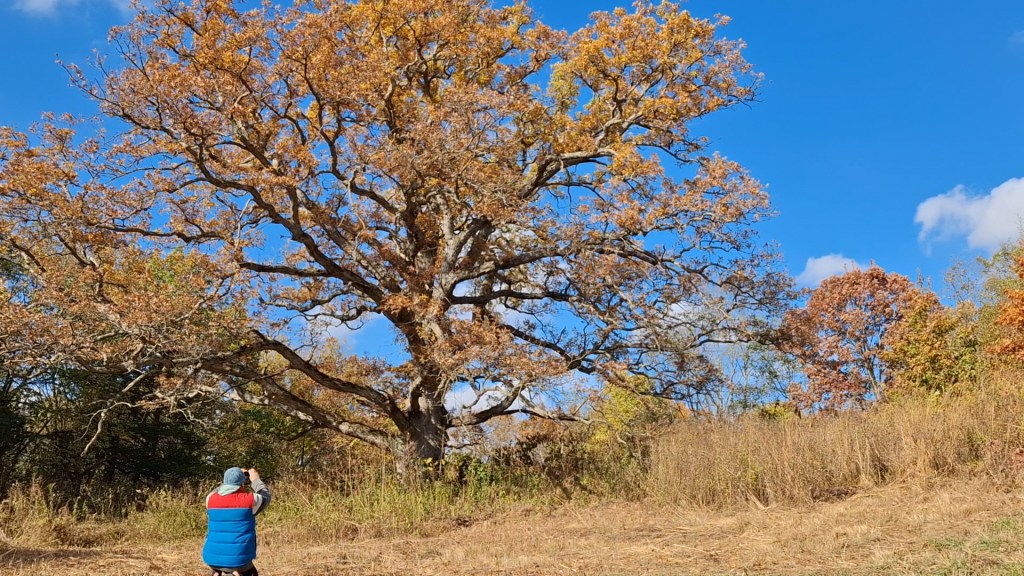
FYI the main tree pics in the gallery here is a frame grab from a video. Not the best resolution. It’s late on a Sunday night and I really just wanted to write and mark the moment. Today I went out to Rochester Cemetery in Iowa for the Iowa Prairie Documentary Project. It has, what is considered to be, the finest stand of Oak Savannah in the entire state. There is a lot to why this designation is given but the old growth oak trees are definitely a big part of it. This is my fourth visit to Rochester Cemetery. I am planning on visiting and documenting how the oaks change in each season. Today though was about taking shots of each remaining oak tree within the pioneer cemetery grounds, since that is where the some of the land has never been tilled, grazed or otherwise mucked with since the last glacier retreated from this area. The area stands as an island in a sea of cultivated humanscaped “progress”. Documenting via photography and video, each individual tree was quite an experience.

We have to spend time in a place to understand what it can teach us. It’s like the words it’s saying come forth ever so slowly. If you just pop in for a quick visit, you will barely get the first word. It takes time to let the land teach you. And it takes seeing a piece of land through different seasons to see what the larger world is saying to it, how it’s interacting with everything around it.

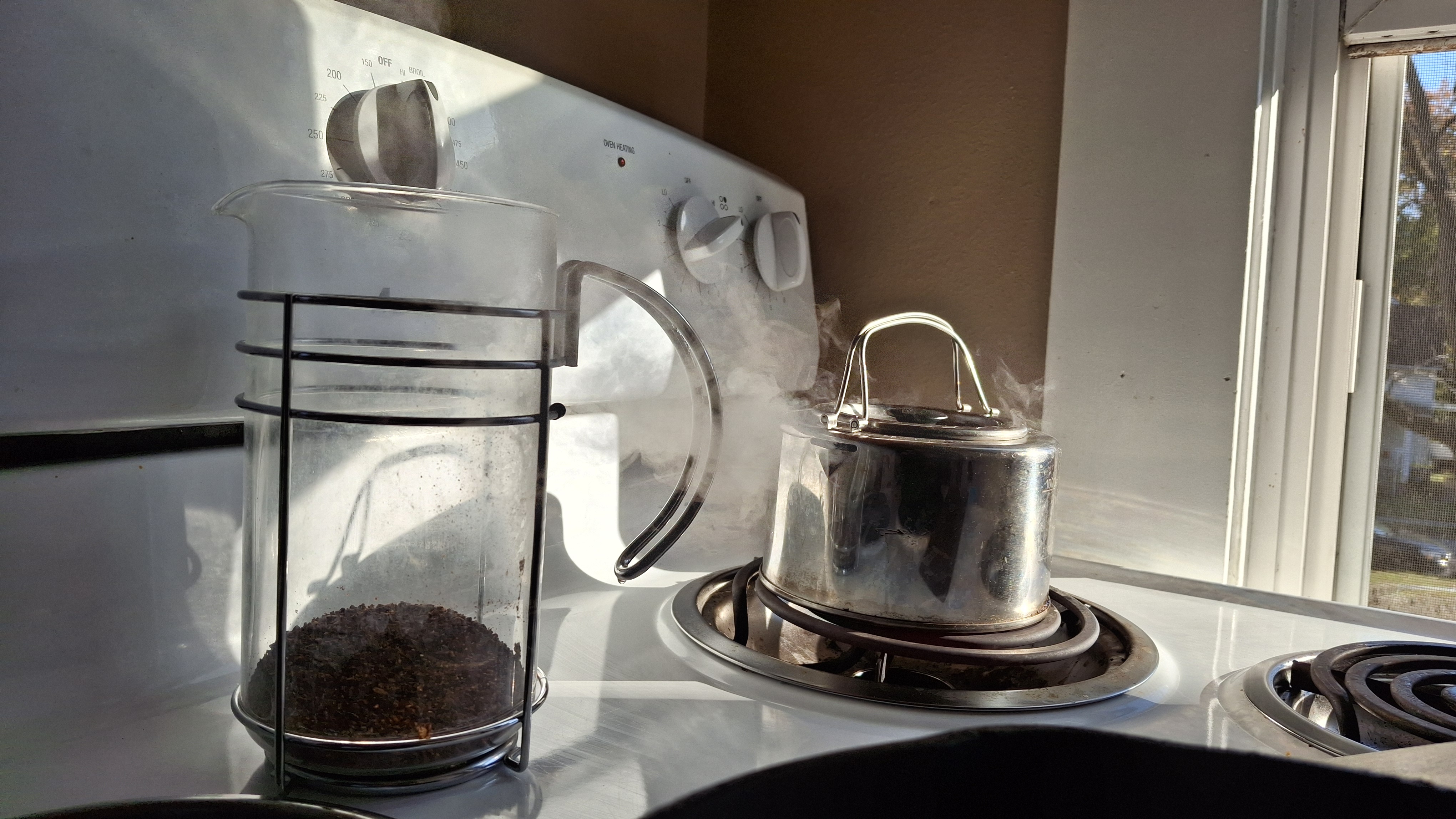
The other pics are just me in a hammock and my tea kettle boiling lol.

AI: Late Night Thoughts

Late night thoughts about AI…

Common convo starts to the AI issue:

“AI does _______”

“AI is replacing ______”

“I created this using AI and ________”

“Check out this short video I made with AI”

Somewhere along the way we have forgotten that AI doesn’t create. AI is a creation of humans. Humans keep making AI tools that humans use. We don’t have an AI problem. We have 3 overlooked issues instead:

1) Humans are foolish enough to make a job replacing technology without first figuring out where all the newly unemployed people will find work.

2) We keep blaming AI as if it is somehow the agent making the changes.

3) The more people use AI, the more it is being trained to do more of our jobs.

If you are one of the people using the notion that embracing AI tools now makes you a leader in some new successful leading edge, you are quite literally training your replacement with every prompt.

Really what AI is, is a shovel. And we keep using it to dig ourselves into a hole that we can’t climb out of.

That Kind of Movie

If you are going to document something, it means to faithfully represent what is/was there, so that it can be shared and understood. What happens when you document what has happened and you leave portions out of that documentary effort, is that you become a part of erasure. And it can happen so innocently. You may not want to impact someone’s reputation, for example. Or you need to keep someone on the record, so it means possibly that you have to exclude someone else…because they have beef with one another. People can lose their livelihood, often unbeknownst to them, for being involved in documenting the truth of what’s transpired around a certain issue. Moneyed interests can influence one’s decision or an organization’s choice to be a part of accurately documenting history as well as contemporary (right now!) events.

I guess what’s wild to me is that from day one of starting on my first documentary about exposing truths (in 2015)…I keep learning how you can’t tell the whole truth. Not in the kind of society that we have all agreed to live in. Call it an affectation of so-called “polite society” perhaps…or call it fear. Call it pragmatism. I’d say that our society is designed as a place for people to hide from the truth. I am not saying it happens on purpose. I don’t think it’s intentional. I think instead that we unconsciously seek to protect ourselves and so sleepily design a world of mattresses where we can take naps while it all falls apart around us. We’d rather not know…I mean…don’t interrupt our Netflix.

The bottomline line is that it’s difficult to say the whole damn thing and that’s frustrating as hell. The only way to have a pure documentary film or podcast is to interview people, and to be the kind of person, where your employment has no strings to the topic…where you won’t lose any friends for your honest words, where people are willing to put it all out there because they have stopped sleeping.

In every case, a conservation documentary hinges on the same tired premise; Money corrupts absolutely. There are many ways to effectively tell that story…which I don’t think we’ve seen yet. I want to find one of them, and put it to good use.

In this podcast, but especially when it comes to the movie…I want to really do something different with this film about the Iowa Prairie. I want to take a lot of creative directions that I have never attempted. I currently live in what is most likely the most environmentally degraded and abused landmass in the entire USA. But hardly anyone realizes it yet. Few understand just how bad it is here and what it means for the future. I have made some wonderful documentary pieces. I wouldn’t change a thing about them. But this one? Iowa needs a movie that makes the audience think “I can’t believe he just said that…and it was true” I am hoping that I can find enough people in the state who are willing to tell it like it is. Because a documentary without a community and without people who risk…isn’t one that makes an impact. And Iowa NEEDS an impact. I hope for a creation that leaves an indelible impression.

Anywho…here is Podcast Episode #2

Dusting off the Cobwebs

Today I was out capturing potential “soundbeds” for the podcast and also testing a new mic I bought for interviews for the movie (The Iowa Prairie Documentary Project). Grabbed a couple of pics of this lovely stretch of land that Iowa City is allowing to grow back. There’s a really nice stand of Bluestem there. Some were 8′ tall! Also had a visitor on my mic. And grabbed a nice shot of a bumbler on what I think is called Carduus acanthoides?